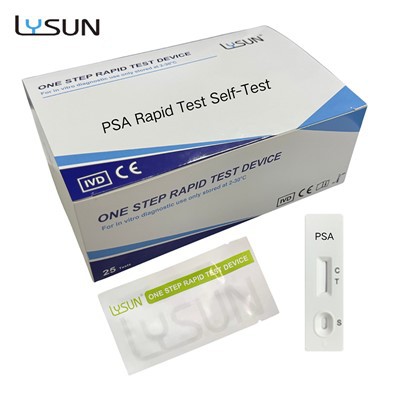


An Psa At Home Test is a kit used to measure prostate-specific antigen (PSA) levels in the blood to screen for potential prostate issues, including cancer, by analyzing a finger-prick blood sample. These kits, which can be bought online or in-store, offer convenience but may have lower accuracy compared to laboratory tests and lack the immediate guidance of a healthcare professional.


|
Product name |
PSA Rapid Test Device |
|
Item type |
PSA-W21-2 |
|
Specimens |
Whole blood/Plasma/Serum |
|
Shelf life |
2 years |
|
Test Time |
Waiting about 15 minutes |
|
Certificate |
CE, ISO:13485 |
|
OEM |
Acceptable |
|
Storage condition |
The kit should be stored at 2-30°C |
BIBLIOGRAPHY
1. Wang MC, Valenzuela LA, Murphy GP, et al., Purification of human prostate specificity antigen. Invest Urol 1979; 17: 159‐163.
2. Christens A, Laurell CB, Lilja H. Enzymatic activity of prostate –specific antigen and its reaction with extracellular serine proteinase Inhibitors. Eur J Biochem 1990; 194:755‐763.
3. Catalona WJ, Southurick PC, Slawin KM, et al., Comparison of percent free PSA, PSA density and age-specific PSA cut-offs for prostate cancer detection and staging. Urology 2000 Aug 1:56(2):255‐60.
4. Lodding P, Aus G, Bergdahl S, et al. Characteristics of screening detected prostate cancer in men 50 to 66 years old with 3 to 4 ng./mL. prostate specific antigen. Journal of Urology 159(3): 899‐903, 1998.
PRECAUTIONS
For professional in vitro diagnostic use only. Do not use after expiration date.
The test should remain in the sealed pouch until use.
Do not eat, drink or smoke in the area where the specimens or kits are handled.
Do not use test if pouch is damaged.
Handle all specimens as if they contain infectious agents. Observe established precautions against microbiological hazards throughout the procedure and follow the standard procedures for proper disposal of specimens.
Wear protective clothing such as laboratory coats, disposable gloves or eye protection when specimens are being tested.
Humidity and temperature can adversely affect results.
The used test should be discarded according to local regulations.
EXPECTED VALUES
The generally accepted minimum indicative level of PSA for Prostate Cancer is 4 ng/mL and the accepted warning level is 10 ng/mL. Local regulations may define different reference levels, please consult with authorities for specifics. The PSA Rapid Test Device(Whole Blood/Serum/Plasma) has been compared with a leading commercial PSA enzyme immunoassay (EIA) test. The correlation between these two systems is 98.6%.
FAQ
Q: How accurate are home PSA tests?
A: An inflamed prostate (prostatitis) can also cause raised PSA, as can urine infections – and even vigorous exercise and sexual activity. In some cases, rapid home tests can give a false negative result, offering false reassurance for users who should go on to have further tests for cancer.
Q: Can I check my PSA level at home?
A: At-home 'prostate health' or PSA blood tests are kits that anyone over the age of 18 can buy online or in-store. They include materials that enable you to collect your own blood sample for testing your PSA level.
Q: What are the 5 warning signs of prostate cancer?
A: When symptoms do occur, they can include: trouble urinating or decreased force of stream, blood in the urine or semen, bone pain, unexpected weight loss, and unexplained fevers. If you consistently notice any of these symptoms, you should see your doctor right away.
Q: What to avoid before a PSA test?
A:Preparing for a PSA blood test is simple but essential for obtaining reliable results. By avoiding activities like ejaculation, vigorous exercise, and certain medications, and by staying hydrated and stress-free, you can help ensure your PSA levels reflect your true prostate health.
Q: Why is PSA no longer recommended?
A: Doctors used to believe that changes in PSA (known as "PSA velocity") were an indicator that cancer might be present, even in patients with no history of the disease. But researchers from MSK published several studies showing that looking at changes in PSA was not of value.
Q: How do I tell if my prostate is ok?
A: You may be asked to give a urine sample for testing. Your doctor also may do a blood test to check the prostate-specific antigen (PSA) level. PSA levels can be high in men with an enlarged prostate gland or with prostate cancer. You may also need an ultrasound exam that takes computer pictures of the prostate
Hot Tags: psa at home test, China psa at home test manufacturers, suppliers, factory, Psa Semi Quantitative Rapid Test, psa rapid test, Psa Rapid Test Kit