
What does a cotinine test measure? Well, let's dive right into it. As a cotinine test supplier, I've got a pretty good handle on what these tests are all about, and I'm stoked to share that knowledge with you.
First off, cotinine is a metabolite of nicotine. When you smoke cigarettes, chew tobacco, or are exposed to second - hand smoke, your body breaks down nicotine into cotinine. Cotinine sticks around in your system way longer than nicotine itself. While nicotine has a half - life of about 1 to 2 hours, cotinine has a half - life of 15 to 20 hours. This makes it a much better marker for recent tobacco use.
So, what exactly does a cotinine test measure? In a nutshell, it measures the amount of cotinine in your body. By detecting cotinine levels, we can tell if someone has been exposed to tobacco products recently. It's not just about smokers, though. Second - hand smoke exposure can also lead to detectable levels of cotinine in non - smokers.
Let's talk about the different types of cotinine tests. There are urine tests, blood tests, and saliva tests. Urine tests are super common because they're non - invasive and relatively easy to administer. You just pee in a cup, and that's it. The Cotinine Urine Test Kit we offer is a great option for this. It's designed to be simple and accurate, giving you reliable results in no time.
Blood tests, on the other hand, are a bit more invasive. A healthcare professional has to draw blood from your vein. But they can provide very precise measurements of cotinine levels. Saliva tests are also becoming more popular. They're quick and easy, just like urine tests. You swab the inside of your mouth, and you're done.
Now, why are these tests important? There are a bunch of reasons. For one, insurance companies often use cotinine tests to determine if someone is a smoker. Smokers generally have higher health risks, so insurance premiums can be higher for them. By testing for cotinine, insurance companies can make more informed decisions about who they're insuring and how much to charge.
Employers might also use cotinine tests. Some workplaces have a smoke - free policy, and they want to make sure their employees aren't smoking on the job or during breaks. A cotinine test can help enforce that policy.
In the healthcare field, cotinine tests can be used to help people quit smoking. Doctors can use the test results to monitor a patient's progress. If someone is trying to quit smoking, a decreasing cotinine level over time is a good sign that they're sticking to their plan.
Let's get into the nitty - gritty of how these tests work. The tests use antibodies that are specifically designed to bind to cotinine. When cotinine is present in the sample (urine, blood, or saliva), the antibodies will react with it. This reaction creates a visible signal, like a color change or a line on a test strip.


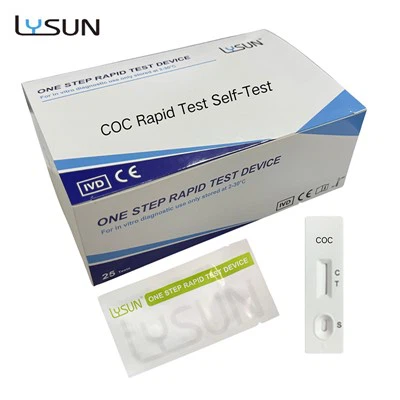
For example, our Cotinine Rapid Test is based on this principle. It's a lateral flow immunoassay. You add the sample to the test strip, and the cotinine in the sample binds to the antibodies on the strip. Then, depending on the amount of cotinine, a line will appear on the test strip. If there's enough cotinine to reach a certain cutoff level, it indicates a positive result, meaning the person has been exposed to tobacco.
The COT Rapid Test is another option we have. It's similar in concept but has its own unique features. It's been optimized for speed and accuracy, so you can get reliable results in a short amount of time.
Now, let's talk about the accuracy of these tests. Generally, cotinine tests are pretty accurate. But there are a few factors that can affect the results. For example, if someone has been exposed to nicotine - containing products other than tobacco, like nicotine patches or gum, it can also show up as a positive result. Also, certain medications or medical conditions might interfere with the test. But overall, when used correctly, these tests are a great way to detect recent tobacco exposure.
If you're in the market for cotinine tests, whether you're an insurance company, an employer, or a healthcare provider, we've got you covered. Our tests are high - quality, easy to use, and cost - effective. We understand that you need reliable results, and that's what we strive to provide.
If you're interested in learning more about our cotinine test products or have any questions about how they work, we'd love to hear from you. Just reach out to us, and we can have a chat about your specific needs. Whether you need a small batch of tests for a one - time screening or a large order for regular use, we can work with you to find the best solution.
In conclusion, cotinine tests are a valuable tool for detecting recent tobacco exposure. They're used in a variety of settings, from insurance companies to healthcare providers. As a cotinine test supplier, we're committed to providing top - notch products that meet your needs. So, if you're looking for reliable cotinine tests, don't hesitate to get in touch.
References
- Benowitz, N. L. (1996). Cotinine as a biomarker of environmental tobacco smoke exposure. Nicotine & Tobacco Research, 179 - 184.
- Foulds, J., & Moolchan, E. T. (2000). Cotinine as a biomarker of tobacco exposure in smoking cessation treatment. Nicotine & Tobacco Research, 203 - 208.