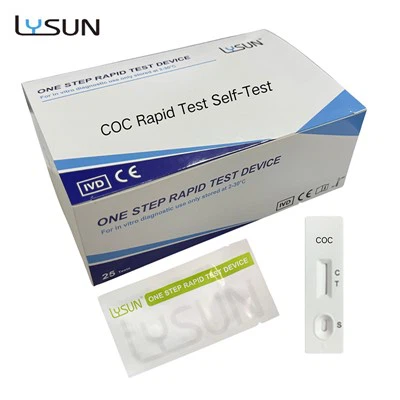

Hey there! As a supplier of the Psa Rapid Test Kit, I've been getting a lot of questions lately about how our PSA rapid test stacks up against imaging - based prostate cancer detection methods. So, I thought I'd take a deep dive into this topic and share some insights with you.
Let's start by understanding what PSA is. PSA stands for prostate - specific antigen, which is a protein produced by the prostate gland. Elevated levels of PSA in the blood can sometimes indicate the presence of prostate cancer, although other non - cancerous conditions like an enlarged prostate or prostatitis can also cause PSA levels to rise.
Our Psa Rapid Test Kit is a quick and easy way to measure PSA levels. It's a point - of - care test, which means it can be done right in a doctor's office, a clinic, or even at home in some cases. You just need a small blood sample, and within a short period (usually 10 - 15 minutes), you can get the results.
On the other hand, imaging - based methods for prostate cancer detection include things like MRI (Magnetic Resonance Imaging), ultrasound, and CT (Computed Tomography) scans. These methods use different technologies to create detailed images of the prostate gland, allowing doctors to look for any signs of tumors or abnormal growths.
Speed and Convenience
One of the biggest advantages of our PSA rapid test is its speed. With imaging - based methods, you often have to make an appointment at a specialized imaging center. You might have to wait for days or even weeks to get your scan done. Then, after the scan, you usually have to wait again for a radiologist to interpret the results. This whole process can take a long time, causing a lot of anxiety for patients.
In contrast, our PSA rapid test can give you results in a matter of minutes. It's like getting an instant snapshot of your PSA levels. This is especially useful in situations where a quick decision needs to be made, such as in a doctor's office during a routine check - up. If the PSA level is high, the doctor can then decide whether further testing, including imaging, is necessary.
Cost
Cost is another important factor to consider. Imaging - based tests can be quite expensive. MRI scans, in particular, are costly because they require specialized equipment and trained technicians. Insurance may cover some of the cost, but patients often still have to pay a significant out - of - pocket amount.
Our PSA rapid test, on the other hand, is much more affordable. It doesn't require expensive equipment or a large medical facility. The test kit itself is relatively inexpensive, and the overall cost of performing the test is a fraction of what an imaging test would cost. This makes it a more accessible option for many people, especially those without comprehensive insurance coverage.
Sensitivity and Specificity
When it comes to detecting prostate cancer, both methods have their strengths and weaknesses in terms of sensitivity and specificity.
The sensitivity of a test refers to its ability to correctly identify people who have the disease. Our PSA rapid test can detect elevated PSA levels, which can be an early sign of prostate cancer. However, as I mentioned earlier, non - cancerous conditions can also cause PSA levels to rise. So, a positive PSA test doesn't necessarily mean a person has cancer.
Imaging - based methods can provide more detailed information about the prostate gland. They can show the size, shape, and location of any abnormal growths. However, small tumors may not always be visible on an image, especially in the early stages of the disease. So, imaging tests also have limitations in terms of sensitivity.
The specificity of a test refers to its ability to correctly identify people who don't have the disease. PSA rapid tests can sometimes give false - positive results, leading to unnecessary anxiety and further testing. Imaging tests can also have false - negative results, where a tumor is present but not detected on the image.
Comfort and Invasiveness
PSA rapid tests are minimally invasive. All that's required is a simple finger - prick to get a small blood sample. It's a quick and relatively painless procedure that most people can tolerate easily.
Imaging tests, on the other hand, can be uncomfortable for some patients. MRI scans, for example, require the patient to lie still in a narrow tube for an extended period. This can be claustrophobic for some people. Ultrasound tests may involve the insertion of a probe into the rectum, which can be uncomfortable and embarrassing for patients.
Complementary Use
It's important to note that our PSA rapid test and imaging - based methods are not mutually exclusive. In fact, they can be used together to get a more accurate diagnosis of prostate cancer.
A PSA rapid test can be used as an initial screening tool. If the PSA level is normal, it's likely that the risk of prostate cancer is low. However, if the PSA level is high, it can serve as a red flag, indicating that further testing, such as an imaging test, is needed.
Imaging tests can then provide more detailed information about the prostate gland, helping doctors to determine the extent and location of any tumors. This information is crucial for planning the appropriate treatment.
Availability
Our PSA rapid test is widely available. It can be used in a variety of settings, including small clinics in rural areas where access to imaging facilities may be limited. This means that more people can have access to prostate cancer screening, regardless of their location.
Imaging - based tests are usually only available at specialized medical centers. This can be a problem for people who live in remote areas or who have limited mobility.
Conclusion
In conclusion, our PSA rapid test and imaging - based prostate cancer detection methods each have their own advantages and disadvantages. The PSA rapid test offers speed, convenience, and affordability, making it a great initial screening tool. Imaging - based methods, on the other hand, provide detailed anatomical information that can be crucial for diagnosis and treatment planning.


If you're a medical professional looking for a reliable and cost - effective way to screen for prostate cancer, our Psa Rapid Test Kit could be a great addition to your practice. If you're interested in learning more about our product or discussing a potential purchase, don't hesitate to reach out. We're always happy to talk about how our PSA rapid test can benefit your patients and your practice.
References
- American Cancer Society. (2023). Prostate Cancer Early Detection.
- National Cancer Institute. (2023). Prostate - Specific Antigen (PSA) Test.
- European Association of Urology. (2023). Guidelines on Prostate Cancer.