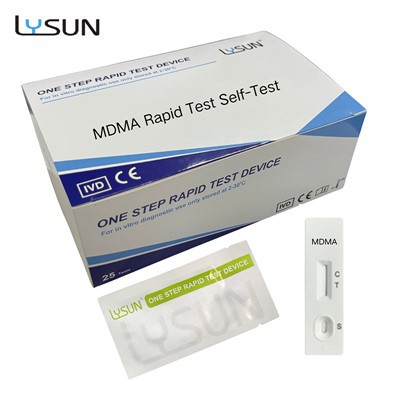

As a trusted supplier of Ecstasy Tests, I've been asked numerous questions about the capabilities and applications of our products. One question that frequently comes up is whether an Ecstasy Test can be used to detect ecstasy in hair samples. In this blog post, we'll explore this topic in depth, looking at the science behind hair drug testing, the effectiveness of ecstasy tests for hair samples, and the implications for various stakeholders.
The Science of Hair Drug Testing
Hair drug testing is based on the principle that drugs and their metabolites can be incorporated into the hair shaft as it grows. When a person consumes a drug, it enters the bloodstream and is distributed throughout the body. Some of the drug and its metabolites are then deposited into the hair follicles, where they become trapped in the hair shaft as it grows. This means that hair can act as a long - term record of drug use, with the potential to detect drug use over a period of several months, depending on the length of the hair sample.
The process of hair drug testing typically involves collecting a small sample of hair, usually from the scalp. The sample is then washed to remove any external contaminants, such as sweat, dirt, or hair products. After washing, the hair is cut into small pieces and subjected to a chemical extraction process. This extracts the drugs and their metabolites from the hair shaft. The extracted substances are then analyzed using various techniques, such as immunoassays or chromatography - based methods, to determine the presence and quantity of specific drugs.
Can Ecstasy Tests Detect Ecstasy in Hair Samples?
The short answer is yes, but with some important caveats. Ecstasy, also known as MDMA (3,4 - methylenedioxymethamphetamine), can be detected in hair samples using appropriate testing methods. However, the detection of MDMA in hair is more complex than in other biological samples, such as urine or saliva.
Factors Affecting Detection
- Dosage and Frequency of Use: The amount of MDMA a person consumes and how often they use it can significantly affect its detectability in hair. Higher doses and more frequent use are more likely to result in detectable levels of MDMA and its metabolites in the hair.
- Time Since Last Use: As hair grows at an average rate of about 1 centimeter per month, the length of the hair sample can provide an estimate of the time frame for drug use. For example, a 3 - centimeter hair sample can potentially detect drug use over the past three months. However, it's important to note that the initial incorporation of MDMA into the hair may take some time, and the drug may not be detectable immediately after use.
- Hair Characteristics: The color, texture, and treatment of the hair can also influence the detection of MDMA. For example, some hair dyes or chemical treatments may affect the integrity of the drug molecules in the hair or interfere with the extraction and analysis process.
Testing Methods
Our MDMA Drug Test Kit and MDMA Drug Test are designed to detect MDMA in various biological samples, including hair. These tests use advanced immunoassay technology, which is sensitive and specific for MDMA and its metabolites. The immunoassay works by detecting the binding of MDMA or its metabolites to specific antibodies in the test. If MDMA is present in the hair sample, it will bind to the antibodies, producing a detectable signal.
However, immunoassay tests can sometimes produce false - positive or false - negative results. To confirm the presence of MDMA in hair samples, a confirmatory test using a more specific method, such as gas chromatography - mass spectrometry (GC - MS) or liquid chromatography - tandem mass spectrometry (LC - MS/MS), is often recommended. These methods are more accurate and can provide quantitative information about the amount of MDMA in the sample.
Implications for Different Stakeholders
Employers
For employers, hair drug testing for MDMA can be a valuable tool for maintaining a safe and productive work environment. By detecting long - term drug use, employers can identify employees who may have a substance abuse problem and take appropriate action, such as providing counseling or referring the employee to a rehabilitation program.
Law Enforcement
Law enforcement agencies can use hair drug testing to gather evidence in criminal investigations. The ability to detect MDMA use over a longer period of time can be useful in cases where drug - related crimes are suspected, such as drug trafficking or driving under the influence of drugs.
Healthcare Providers
Healthcare providers can use hair drug testing to assess a patient's history of MDMA use. This information can be important in providing appropriate medical treatment, especially in cases where MDMA use may have contributed to a patient's health problems, such as cardiovascular or psychological issues.
Conclusion
In conclusion, an Ecstasy Test can be used to detect ecstasy in hair samples, but it requires careful consideration of various factors, such as dosage, frequency of use, time since last use, and hair characteristics. While immunoassay - based tests are a convenient and sensitive method for initial screening, confirmatory testing using more advanced techniques is necessary for accurate results.


If you're interested in learning more about our Ecstasy Tests or would like to discuss your specific testing needs, we encourage you to get in touch. Our team of experts is available to provide personalized advice and support, and we can help you choose the right testing solution for your situation. Whether you're an employer, law enforcement agency, or healthcare provider, we're committed to providing high - quality, reliable drug testing products to meet your needs.
References
- Cone, E. J., & Darwin, W. D. (1996). Hair analysis for drugs. Journal of Analytical Toxicology, 20(3), 183 - 186.
- Kintz, P. (2007). Drug testing in hair: Principles and applications. CRC Press.
- Moore, K. M., & Cone, E. J. (2004). Hair analysis for drugs: A review. Journal of Analytical Toxicology, 28(7), 473 - 482.