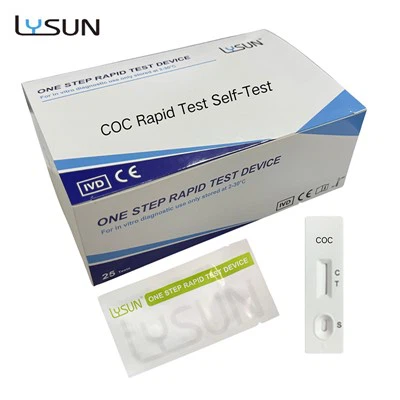

Medication interference with drug test results is a topic of significant concern, especially when it comes to drug screening tests like the COC Test Kit. As a supplier of COC Test Kit, I've had numerous inquiries from clients about whether medications can affect the results of these tests. In this blog, we'll explore this issue in detail, looking at the science behind drug testing, common medications that may interfere, and what it means for the accuracy of COC testing.
Understanding the COC Test Kit
The COC Test Kit is a widely used tool for detecting the presence of cocaine metabolites in biological samples, most commonly urine. Cocaine is rapidly metabolized in the body, and the primary metabolite, benzoylecgonine, is what the test is designed to detect. When a person uses cocaine, benzoylecgonine is excreted in the urine, and the test kit can identify its presence above a certain threshold.


The COC Urine Test is a simple and cost - effective way to screen for cocaine use. It typically uses immunoassay technology, which relies on antibodies to bind specifically to the target molecule (benzoylecgonine in this case). If the target molecule is present in the sample at a sufficient concentration, a visible signal is produced, indicating a positive result.
How Medications Can Interfere with Drug Tests
Medications can interfere with drug test results in several ways. One of the most common mechanisms is cross - reactivity. Some medications have chemical structures that are similar to the target molecule of the drug test. As a result, the antibodies in the test kit may bind to these medications, producing a false - positive result.
Another way medications can interfere is by affecting the metabolism of the drug being tested. For example, some medications may inhibit or induce the enzymes responsible for metabolizing cocaine. This can alter the levels of cocaine metabolites in the urine, potentially leading to false - negative or false - positive results.
Common Medications That May Cause Interference
- Antibiotics: Some antibiotics, such as fluoroquinolones, have been reported to cause false - positive results in drug tests. For example, ciprofloxacin has a chemical structure that can cross - react with the antibodies in some immunoassay tests, leading to a false indication of cocaine use.
- Antidepressants: Certain antidepressants, like bupropion, have also been associated with false - positive drug test results. Bupropion can cause false positives for amphetamines in some tests, although its potential to interfere with COC tests is less well - documented. However, its complex metabolism and chemical structure mean that there is a theoretical possibility of cross - reactivity.
- Antihistamines: Some antihistamines, such as diphenhydramine, may interfere with drug tests. Although diphenhydramine is not typically associated with false - positives for cocaine, its chemical properties could potentially lead to cross - reactivity in some test systems.
Case Studies and Research Findings
There have been several case studies and research efforts to investigate the impact of medications on drug test results. One study published in the Journal of Analytical Toxicology examined the cross - reactivity of various medications with drug test immunoassays. The researchers found that a significant number of medications could cause false - positive results in drug tests, although the frequency of cross - reactivity with COC tests was relatively low compared to other drugs like amphetamines.
In another case report, a patient taking a combination of antibiotics and antidepressants tested positive for cocaine on a COC Test Kit. Further investigation revealed that the medications were the likely cause of the false - positive result. This highlights the importance of considering a patient's medication history when interpreting drug test results.
Minimizing the Risk of Interference
To minimize the risk of false - positive or false - negative results due to medications, it's important to take several precautions. First, when conducting a drug test, it's essential to collect a detailed medication history from the individual being tested. This information can help in interpreting the results accurately.
If a positive result is obtained, confirmatory testing should be performed using a more specific method, such as gas chromatography - mass spectrometry (GC - MS). GC - MS is considered the gold standard for drug testing because it can accurately identify and quantify the specific drug metabolites in the sample, reducing the risk of false - positives due to cross - reactivity.
Implications for COC Test Kit Users
For employers, healthcare providers, and other users of COC Test Kit, the potential for medication interference means that they need to be cautious when interpreting test results. A positive result should not be immediately assumed to indicate cocaine use. Instead, further investigation, including a review of the individual's medication history and confirmatory testing, should be carried out.
For individuals taking medications, it's important to inform the testing facility about all the medications they are taking. This can help prevent false - positive results and ensure that the test results are interpreted correctly.
The Role of the COC Test Kit Supplier
As a supplier of COC Test Kit, we have a responsibility to provide accurate information to our customers about the potential for medication interference. We offer detailed product information, including warnings about possible cross - reactivity with medications.
We also work closely with our customers to address any concerns they may have about drug test accuracy. Our technical support team is available to answer questions about test interpretation, confirmatory testing, and the impact of medications on test results.
Conclusion
In conclusion, medications can potentially affect the results of a COC Test Kit. Cross - reactivity and alterations in drug metabolism are the main mechanisms by which medications can interfere with the test. While the risk of false - positives or false - negatives due to medications is relatively low for COC tests, it's still an important consideration.
To ensure the accuracy of drug test results, it's crucial to collect a detailed medication history, perform confirmatory testing when necessary, and stay informed about the latest research on medication interference. As a trusted supplier of COC Test Kit, we are committed to providing high - quality products and reliable information to our customers.
If you are interested in purchasing our COC Test Kit or have any questions about its performance and potential interference from medications, please don't hesitate to contact us. We are here to assist you in making informed decisions about drug testing.
References
- Journal of Analytical Toxicology, various issues on medication cross - reactivity in drug tests.
- Case reports on false - positive drug test results due to medications from medical literature databases.