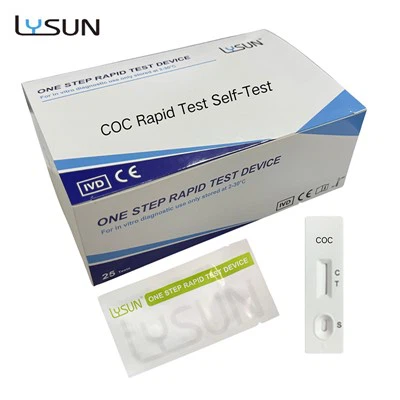

As a supplier of LH Rapid Tests, I've had numerous conversations with customers who are curious about the differences between an LH surge and a normal LH level when using our LH Rapid Test. In this blog post, I'll delve into the science behind these concepts, explain how they are detected by our tests, and highlight why understanding these differences is crucial for various applications.
Understanding LH Hormone
Luteinizing hormone (LH) is a crucial hormone produced by the anterior pituitary gland in the brain. In women, LH plays a pivotal role in the menstrual cycle. It stimulates the growth of ovarian follicles, which contain the eggs. As the follicles mature, they produce increasing amounts of estrogen, which in turn causes a surge in LH production.
Normal LH Levels
Normal LH levels vary depending on a woman's age, menstrual cycle phase, and overall health. During the follicular phase of the menstrual cycle (the first half), LH levels are relatively low, typically ranging from 1.9 to 12.5 mIU/mL. As the cycle progresses towards ovulation, LH levels gradually increase.
In the luteal phase (the second half of the menstrual cycle), LH levels decline again. After menopause, LH levels tend to be higher, usually above 15.9 mIU/mL, as the ovaries are no longer producing eggs and the feedback loop that regulates LH production is disrupted.
The LH Surge
The LH surge is a significant event in the menstrual cycle. It is a sudden and dramatic increase in LH levels that triggers ovulation. Typically, the LH surge occurs about 24 - 36 hours before the release of the egg from the ovary. During the LH surge, LH levels can rise to as high as 45 - 85 mIU/mL, depending on the individual.
This surge is a key indicator for women who are trying to conceive. By detecting the LH surge, they can identify their most fertile days and time intercourse accordingly. Additionally, the LH surge can also be used in fertility treatments to time procedures such as intrauterine insemination or in vitro fertilization.
Detecting LH Levels with an LH Rapid Test
Our LH Hormone Test Kit is designed to accurately detect and measure LH levels in urine. The test works on the principle of immunochromatography. It contains antibodies that specifically bind to LH in the urine sample.
When a woman performs the test, she simply collects a urine sample and applies it to the test strip. If LH is present in the urine, it will bind to the antibodies on the test strip, causing a visible line to appear. The intensity of the line is proportional to the amount of LH in the urine.
To determine whether an LH surge has occurred, a woman needs to compare the test line with the control line on the test strip. If the test line is as dark or darker than the control line, it indicates a positive result, suggesting that an LH surge is taking place.
Key Differences between an LH Surge and Normal LH Levels on an LH Rapid Test
- Line Intensity: On an LH rapid test, a normal LH level will typically result in a faint or very light test line, which is much lighter than the control line. In contrast, during an LH surge, the test line will be as dark or darker than the control line. This clear difference in line intensity makes it easy for users to distinguish between normal LH levels and an LH surge.
- Timing: Normal LH levels are present throughout most of the menstrual cycle, with only gradual changes. However, the LH surge is a short - lived event that occurs suddenly and lasts for about 1 - 2 days. Women need to test daily, especially around the expected time of ovulation, to catch the LH surge.
- Clinical Significance: Normal LH levels are part of the regular hormonal balance in the body. They indicate the normal functioning of the reproductive system. An LH surge, on the other hand, is a critical event for fertility. It signals that ovulation is imminent, making it a prime time for conception.
Importance of Understanding the Differences
For women trying to conceive, understanding the difference between an LH surge and normal LH levels is essential. By accurately detecting the LH surge, they can increase their chances of getting pregnant. It allows them to plan intercourse at the most fertile time, when the egg is available for fertilization.
In addition, healthcare providers can also use LH testing to diagnose certain reproductive disorders. Abnormal LH levels or an absence of an LH surge can be indicative of conditions such as polycystic ovary syndrome (PCOS), hypothalamic amenorrhea, or pituitary disorders.
How Our LH Rapid Test Can Help
Our LH Rapid Test offers several advantages. It is highly sensitive, capable of detecting even low levels of LH accurately. The test is also easy to use, with clear instructions provided, so women can perform the test in the comfort of their own homes.


Moreover, our test provides quick results, usually within 5 - 10 minutes. This allows women to get immediate feedback on their LH levels and make timely decisions regarding their fertility.
Conclusion
In conclusion, the difference between an LH surge and a normal LH level on an LH rapid test is significant. The distinct line intensity, timing, and clinical significance make it crucial for women to understand these differences, especially those who are trying to conceive or manage their reproductive health.
Our LH Hormone Test Kit provides a reliable and convenient way to detect and monitor LH levels. If you are interested in purchasing our high - quality LH rapid tests for personal use or for your healthcare facility, we encourage you to contact us for more information and to discuss procurement details. We are committed to providing the best products and services to meet your needs.
References
- Speroff L, Glass RH, Kase NG. Clinical Gynecologic Endocrinology and Infertility. 7th ed. Philadelphia: Lippincott Williams & Wilkins; 2005.
- Strauss JF 3rd, Barbieri RL. Yen & Jaffe's Reproductive Endocrinology. 6th ed. Philadelphia: Saunders; 2009.