
Hey there, sports enthusiasts and professionals! As a supplier of Morphine Tests, I've seen firsthand the importance of these tests in the world of sports. Today, I'm gonna break down the rules regarding Morphine Tests in sports, so you can have a clear understanding of what's what.
First off, let's talk about why Morphine Tests are even a thing in sports. Morphine is a powerful opioid drug that can have some pretty serious effects on the body. It's commonly used as a painkiller in medical settings, but in sports, it's considered a banned substance. The reason for this is that it can give athletes an unfair advantage. Morphine can mask pain, allowing athletes to push through injuries and perform at a higher level than they normally would. It can also have psychological effects, such as reducing anxiety and increasing confidence.
So, what are the rules when it comes to Morphine Tests in sports? Well, it all depends on the sport and the governing body that oversees it. Most major sports organizations, like the International Olympic Committee (IOC) and the World Anti-Doping Agency (WADA), have strict rules against the use of Morphine and other opioids. These rules are in place to ensure a level playing field for all athletes and to protect the health and safety of the athletes themselves.
In general, athletes are subject to random drug testing throughout the year. This means that at any time, they could be asked to provide a urine or blood sample for testing. If a Morphine Test comes back positive, the athlete could face serious consequences, including suspension, fines, and even disqualification from competitions.
But it's not just about the random testing. Athletes are also required to disclose any medications they're taking, including prescription drugs. This is important because some medications may contain Morphine or other opioids as an ingredient. If an athlete is taking a legitimate prescription medication that contains Morphine, they need to have the proper documentation to prove it. Otherwise, they could be in violation of the anti-doping rules.
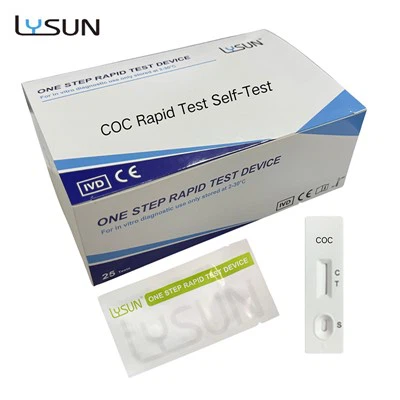
Now, let's talk about the types of Morphine Tests that are available. As a supplier, I offer two main types of tests: the Morphine Test and the Morphine (MOP) Rapid Test. The Morphine Test is a more comprehensive test that can detect the presence of Morphine in the body at very low levels. It's often used in more formal drug testing situations, such as those conducted by sports organizations. The Morphine (MOP) Rapid Test, on the other hand, is a quicker and more convenient test that can provide results in just a few minutes. It's often used for on-site testing or for preliminary screening.
Both types of tests are highly accurate and reliable. They use advanced technology to detect the presence of Morphine in the body, and they're designed to be easy to use. Whether you're a sports organization looking to conduct drug testing on your athletes or an individual athlete who wants to make sure you're clean, these tests are a great option.
So, how do these tests work? Well, it's actually pretty simple. For the urine tests, the athlete just needs to provide a urine sample in a clean container. The sample is then tested using a special kit that contains antibodies that are designed to bind to Morphine. If Morphine is present in the sample, the antibodies will bind to it, and a visible line will appear on the test strip, indicating a positive result. For the blood tests, a small sample of blood is taken from the athlete's arm. The sample is then analyzed in a laboratory using more advanced techniques to detect the presence of Morphine.
It's important to note that these tests are not perfect. There is always a small chance of a false positive or a false negative result. A false positive result means that the test indicates the presence of Morphine when there actually isn't any. This can happen for a variety of reasons, such as if the athlete has taken a medication that contains a similar compound to Morphine. A false negative result means that the test indicates the absence of Morphine when there actually is some in the body. This can happen if the test is not sensitive enough to detect very low levels of Morphine or if the sample is not collected or stored properly.
To minimize the risk of false results, it's important to follow the instructions carefully when using the tests. It's also a good idea to have the tests conducted by a trained professional. If you're a sports organization, you may want to consider working with a reputable drug testing laboratory that has experience in conducting Morphine Tests.


Now, I know what you're thinking. "This all sounds great, but how do I know if I need to use these tests?" Well, if you're a sports organization, it's a no-brainer. You need to have a drug testing program in place to ensure the integrity of your sport and to protect the health and safety of your athletes. Using Morphine Tests is an important part of that program. If you're an individual athlete, you may want to consider using these tests to make sure you're clean and to avoid any potential problems with the anti-doping rules.
If you're interested in purchasing Morphine Tests for your sports organization or for personal use, I'd love to hear from you. We offer high-quality tests at competitive prices, and we can provide you with all the support and guidance you need to conduct the tests properly. Just reach out to us, and we'll be happy to help you get started.
In conclusion, Morphine Tests are an important part of the anti-doping efforts in sports. They help to ensure a level playing field for all athletes and to protect the health and safety of the athletes themselves. By understanding the rules regarding Morphine Tests and by using high-quality tests, we can all do our part to keep sports clean and fair.
References
- World Anti-Doping Agency (WADA). Anti-Doping Code.
- International Olympic Committee (IOC). Medical and Anti-Doping Code.