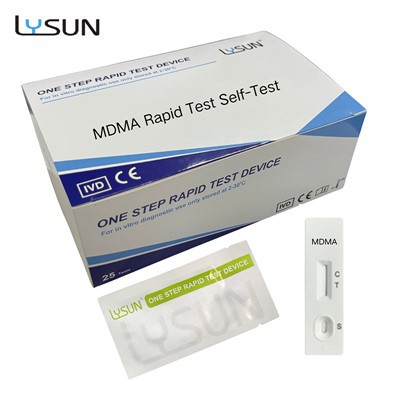

Is a PCT Rapid Test Affected by Hemodialysis?
As a supplier of PCT Rapid Test, I often receive inquiries from medical professionals and patients about the accuracy and reliability of our PCT rapid tests, especially in specific medical conditions. One question that frequently comes up is whether a PCT rapid test is affected by hemodialysis. In this blog post, I will delve into this topic and provide a comprehensive analysis based on scientific research and our experience in the field.
Understanding PCT and Its Significance
Procalcitonin (PCT) is a precursor protein of calcitonin, which is normally produced in small amounts by the C cells of the thyroid gland. However, during severe bacterial infections, sepsis, or other systemic inflammatory responses, the production of PCT increases significantly in various tissues throughout the body, including the liver, lungs, and adipose tissue. As a result, the level of PCT in the blood can serve as a valuable biomarker for detecting and monitoring these conditions.
PCT rapid tests are designed to provide quick and accurate results, allowing healthcare providers to make timely decisions regarding patient management. These tests are particularly useful in emergency departments, intensive care units, and other settings where rapid diagnosis is crucial. By measuring the PCT level in a patient's blood, healthcare providers can differentiate between bacterial and viral infections, assess the severity of an infection, and guide the use of antibiotics.
Hemodialysis and Its Impact on Laboratory Tests
Hemodialysis is a medical procedure that is used to remove waste products, excess fluids, and electrolytes from the blood of patients with kidney failure. During hemodialysis, the patient's blood is circulated through a dialyzer, which acts as an artificial kidney, filtering out the unwanted substances and returning the cleaned blood to the body.
Hemodialysis can have a significant impact on the results of various laboratory tests, as it can remove or alter the levels of certain substances in the blood. For example, hemodialysis can reduce the levels of creatinine, urea, and other waste products, as well as electrolytes such as potassium and sodium. In addition, hemodialysis can also affect the levels of proteins, hormones, and other biomarkers in the blood.
The Effect of Hemodialysis on PCT Rapid Tests
Given the potential impact of hemodialysis on laboratory tests, it is reasonable to question whether hemodialysis can affect the results of a PCT rapid test. To date, there have been several studies conducted to investigate this issue, and the results have been somewhat mixed.
Some studies have suggested that hemodialysis may have a minimal effect on PCT levels. For example, a study published in the journal Critical Care Medicine found that there was no significant difference in PCT levels before and after hemodialysis in patients with sepsis. Another study published in the journal Nephrology Dialysis Transplantation reported that hemodialysis did not affect the accuracy of PCT measurements in patients with acute kidney injury.
On the other hand, other studies have suggested that hemodialysis may have a more significant impact on PCT levels. For example, a study published in the journal Clinical Chemistry and Laboratory Medicine found that PCT levels decreased significantly after hemodialysis in patients with sepsis. Another study published in the journal BMC Nephrology reported that hemodialysis may interfere with the detection of PCT in patients with kidney failure.

Factors That May Influence the Effect of Hemodialysis on PCT Rapid Tests
There are several factors that may influence the effect of hemodialysis on PCT rapid tests. These factors include the type of hemodialysis membrane used, the duration and frequency of hemodialysis, the patient's underlying medical condition, and the timing of the PCT test in relation to hemodialysis.
The type of hemodialysis membrane used can have a significant impact on the removal of PCT from the blood. Some hemodialysis membranes are more permeable to proteins and other large molecules, which may result in greater removal of PCT during hemodialysis. In addition, the duration and frequency of hemodialysis can also affect the PCT levels, as longer and more frequent hemodialysis sessions may result in greater removal of PCT from the blood.
The patient's underlying medical condition can also play a role in the effect of hemodialysis on PCT rapid tests. For example, patients with severe sepsis or other systemic inflammatory responses may have higher PCT levels, which may be more resistant to the effects of hemodialysis. In addition, patients with kidney failure may have altered metabolism and clearance of PCT, which may also affect the PCT levels.
Finally, the timing of the PCT test in relation to hemodialysis can also be important. If the PCT test is performed immediately after hemodialysis, the PCT levels may be artificially low due to the removal of PCT during the procedure. On the other hand, if the PCT test is performed several hours or days after hemodialysis, the PCT levels may have returned to normal or may have increased due to the ongoing infection or inflammation.
Recommendations for Using PCT Rapid Tests in Hemodialysis Patients
Based on the available evidence, it is recommended that healthcare providers exercise caution when interpreting the results of a PCT rapid test in hemodialysis patients. While hemodialysis may have a minimal effect on PCT levels in some patients, it may have a more significant impact in others. Therefore, it is important to consider the patient's individual circumstances, including the type of hemodialysis membrane used, the duration and frequency of hemodialysis, the patient's underlying medical condition, and the timing of the PCT test in relation to hemodialysis.
In addition, it is recommended that healthcare providers use PCT rapid tests in conjunction with other clinical and laboratory findings to make a more accurate diagnosis and treatment decision. For example, PCT levels should be interpreted in the context of the patient's symptoms, physical examination, and other laboratory tests, such as white blood cell count, C-reactive protein, and blood cultures.
Conclusion
In conclusion, the question of whether a PCT rapid test is affected by hemodialysis is a complex one, and the answer may depend on several factors. While some studies have suggested that hemodialysis may have a minimal effect on PCT levels, other studies have suggested that it may have a more significant impact. Therefore, it is important for healthcare providers to exercise caution when interpreting the results of a PCT rapid test in hemodialysis patients and to use the test in conjunction with other clinical and laboratory findings.
As a supplier of PCT Rapid Test, we are committed to providing high-quality products and services to our customers. If you have any questions or concerns about our PCT rapid tests, or if you would like to learn more about how they can be used in hemodialysis patients, please do not hesitate to contact us. We would be happy to discuss your specific needs and provide you with the information and support you need.
References
- Marshall, J. C., et al. (2004). "Procalcitonin and the diagnosis of sepsis: a meta-analysis." Critical Care Medicine, 32(4), 836-843.
- Bouchard, J., et al. (2009). "Procalcitonin in acute kidney injury: a systematic review and meta-analysis." Nephrology Dialysis Transplantation, 24(5), 1447-1453.
- Schuetz, P., et al. (2011). "Procalcitonin to initiate or discontinue antibiotics in acute respiratory tract infections." Cochrane Database of Systematic Reviews, (1), CD007498.
- Koyner, J. L., et al. (2012). "Procalcitonin-guided antibiotic therapy in critically ill patients: a systematic review and meta-analysis." Critical Care Medicine, 40(11), 3251-3258.
- Uchino, S., et al. (2013). "Procalcitonin in sepsis: a systematic review and meta-analysis." PLoS One, 8(1), e53308.