
When it comes to understanding the timeline for getting the results of a cotinine test, several factors come into play. As a leading cotinine test supplier, I've had the privilege of working with various clients and have gained extensive insights into this process. In this blog, I'll delve into the details of how long it typically takes to obtain cotinine test results, the factors that can influence this timeline, and the different types of cotinine tests available.
Understanding Cotinine and Its Significance
Cotinine is a metabolite of nicotine, which means it is produced when the body breaks down nicotine. Measuring cotinine levels in the body is a reliable way to determine tobacco use, as it has a longer half - life compared to nicotine. This makes cotinine a more accurate biomarker for recent and long - term tobacco exposure. Cotinine tests are commonly used in various settings, including healthcare, insurance, and workplace wellness programs.
Types of Cotinine Tests
There are several types of cotinine tests available, each with its own testing method and turnaround time for results.
Urine Tests
Urine cotinine tests are one of the most common methods. They are non - invasive, relatively easy to administer, and cost - effective. The Cotinine Urine Test Kit is a popular choice for many users. For at - home urine cotinine tests, results can be available within minutes. These kits usually come with a test strip that changes color based on the cotinine levels in the urine. If the test is sent to a laboratory for more accurate and detailed analysis, the results typically take 1 - 3 business days. The laboratory analysis involves more sophisticated techniques, such as immunoassay or chromatography, which can provide a more precise measurement of cotinine levels.
Rapid Tests
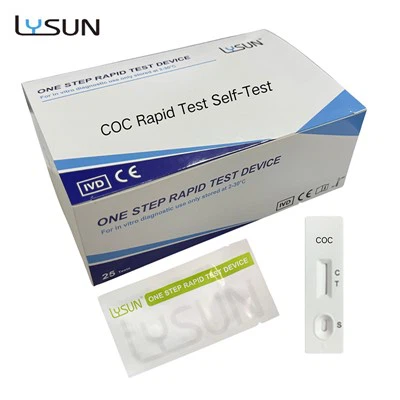
Rapid cotinine tests, such as the Cotinine Rapid Test and COT Rapid Test, are designed to provide quick results. These tests are often used in point - of - care settings, like doctor's offices or clinics. They work by detecting cotinine in a sample, usually saliva or urine. In most cases, rapid cotinine tests can deliver results within 5 - 15 minutes. This makes them ideal for situations where immediate results are needed, such as pre - employment screenings or on - the - spot assessments.
Blood Tests
Blood cotinine tests are considered the most accurate method for measuring cotinine levels. However, they are also more invasive and require a trained professional to draw blood. The turnaround time for blood cotinine test results is typically longer compared to urine or rapid tests. If the blood sample is sent to a laboratory, it can take anywhere from 2 - 5 business days to get the results. This is because blood tests often involve more complex laboratory procedures and a higher level of accuracy is required.
Factors Affecting the Turnaround Time
Several factors can influence how long it takes to get the results of a cotinine test.
Testing Method
As mentioned earlier, the type of test used plays a significant role in the turnaround time. At - home and rapid tests are designed for quick results, while laboratory - based tests, especially those that require more in - depth analysis, take longer.
Laboratory Workload
If the laboratory is experiencing a high volume of tests, it can delay the processing of cotinine test samples. This is more likely to occur during peak testing seasons or in large - scale testing programs. In such cases, it's not uncommon for the turnaround time to be extended by a few days.
Sample Transport
The time it takes for the sample to reach the laboratory can also impact the overall turnaround time. If the sample has to be transported over a long distance or through a complex logistics chain, it can add several days to the process.
Confirmatory Testing
In some cases, the initial test results may require confirmatory testing. This can happen if the results are borderline or if there are concerns about the accuracy of the initial test. Confirmatory testing usually involves more advanced techniques and can take an additional 1 - 3 business days.


Importance of Timely Results
Timely cotinine test results are crucial in many scenarios. In healthcare, doctors need accurate and timely information to make informed decisions about patient treatment. For example, if a patient is trying to quit smoking, knowing their cotinine levels can help the doctor assess the effectiveness of the smoking cessation program.
In the workplace, quick cotinine test results are essential for pre - employment screenings. Employers need to make hiring decisions in a timely manner, and delayed test results can disrupt the recruitment process.
In insurance, cotinine test results can determine the premium rates for policyholders. Insurance companies rely on accurate and up - to - date information to assess the risk associated with insuring individuals who use tobacco.
Our Commitment as a Cotinine Test Supplier
As a cotinine test supplier, we understand the importance of providing high - quality tests with fast turnaround times. We offer a wide range of cotinine tests, including at - home kits, rapid tests, and laboratory - based tests. Our products are designed to be accurate, reliable, and easy to use.
We work closely with our clients to ensure that they receive their test results as quickly as possible. Our network of laboratories is equipped with state - of - the - art technology and staffed by experienced professionals who are dedicated to providing efficient and accurate testing services.
If you're in the market for cotinine tests, whether for personal use, healthcare, workplace, or insurance purposes, we invite you to contact us for more information. We can provide detailed product specifications, pricing, and assistance with choosing the right test for your needs. Our team is ready to engage in procurement discussions and help you find the best cotinine testing solutions.
References
- Benowitz, N. L. (1996). Clinical pharmacology of nicotine: implications for understanding, preventing, and treating tobacco addiction. Clinical Pharmacology and Therapeutics, 60(5), 563 - 579.
- Jarvis, M. J., Russell, M. A., Feyerabend, C., & Foulds, J. (1987). Urinary cotinine as an objective index of tobacco smoke intake. British Journal of Addiction, 82(10), 1127 - 1134.
- Pirkle, J. L., Flegal, K. M., Bernert, J. T., Brody, D. J., & Maurer, K. (1996). Exposure of the U.S. population to environmental tobacco smoke: the Third National Health and Nutrition Examination Survey, 1988 to 1991. JAMA, 275(16), 1233 - 1240.