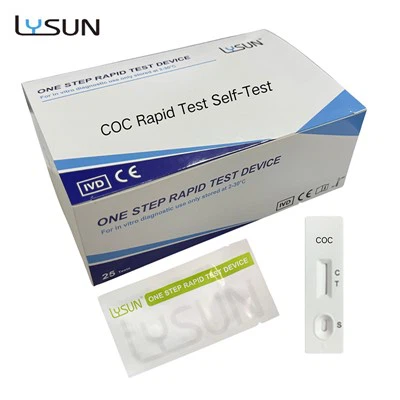

Yo, what's up everyone! I'm a supplier of cotinine tests, and today I wanna chat about how the method of tobacco consumption affects cotinine test results. Cotinine is a metabolite of nicotine, and testing for it is a super popular way to figure out if someone's been using tobacco.
First off, let's talk about the different ways people consume tobacco. There are a few common methods: smoking cigarettes, using chewing tobacco, and vaping. Each of these methods can have a different impact on cotinine levels in the body, and that's what we're gonna dig into.
Smoking Cigarettes
Smoking cigarettes is probably the most well - known way of consuming tobacco. When you light up a cigarette and take a puff, nicotine is quickly absorbed into your bloodstream through the lungs. The nicotine then gets metabolized into cotinine in the liver.
The thing about smoking is that it delivers a relatively large amount of nicotine to the body in a short period. This means that cotinine levels can spike pretty quickly after a smoke. For regular smokers, cotinine can stay in their system for days. A heavy smoker who smokes a pack or more a day can have really high cotinine levels.
In a cotinine test, like our COT Rapid Test, these high levels are likely to show up as a positive result. The test is designed to detect the presence of cotinine in the body, and with the high levels from smoking, it's usually pretty easy to spot.
But it's not just about the amount of cotinine. The timing of the test also matters. If a smoker takes a test right after a smoke, the cotinine levels might be even higher than usual. On the other hand, if they haven't smoked for a while, the levels will start to drop.
Chewing Tobacco
Chewing tobacco is another way people get their tobacco fix. Instead of inhaling nicotine through the lungs, it's absorbed through the lining of the mouth. This method of absorption is a bit slower compared to smoking.
When you chew tobacco, the nicotine is released gradually into the bloodstream. As a result, the increase in cotinine levels is more gradual too. Cotinine levels in people who chew tobacco are generally lower than those in heavy smokers, but they can still be detectable.
Our Cotinine Rapid Test can pick up these lower levels as well. Since the cotinine is still present in the body, the test will show a positive result if the levels are above the detection threshold.
One thing to note about chewing tobacco is that it can be used for longer periods without the breaks that smokers take. This means that cotinine levels can stay relatively stable over time. So, even if a person who chews tobacco hasn't used it for a few hours, there's still a good chance the test will be positive.
Vaping
Vaping has become really popular in recent years. It involves inhaling vapor from an e - cigarette or other vaping device. The nicotine in vape juice is absorbed into the bloodstream through the lungs, similar to smoking.
However, the amount of nicotine in vape juice can vary widely. Some vapes have high - nicotine content, while others have very low or even no nicotine at all. This makes it a bit more complicated when it comes to cotinine test results.
If someone is vaping a high - nicotine e - liquid, their cotinine levels can be similar to those of a light smoker. But if they're using a low - nicotine or nicotine - free vape, the cotinine levels might be undetectable.
Our Cotinine Urine Test Kit can help in accurately detecting these different levels. It's important to know that just because someone is vaping doesn't mean they'll always test positive for cotinine. It all depends on the nicotine content of the vape juice they're using.
Other Factors Affecting Cotinine Test Results
There are also some other factors that can affect cotinine test results, regardless of the method of tobacco consumption. Metabolism plays a big role. Some people have a faster metabolism, which means they can break down cotinine more quickly. So, even if they consume the same amount of tobacco as someone else, their cotinine levels might be lower.
Age can also be a factor. Older people generally have a slower metabolism, so cotinine can stay in their system longer. And gender can have an impact too. Women tend to metabolize nicotine and cotinine a bit differently than men.
Why Accurate Cotinine Testing Matters
Accurate cotinine testing is crucial for a few reasons. In the healthcare field, it can help doctors assess a patient's tobacco use. This is important because tobacco use is linked to a whole bunch of health problems, like heart disease, lung cancer, and respiratory issues. By knowing a patient's tobacco use through cotinine testing, doctors can provide better advice and treatment.
In the workplace, cotinine testing can be used as part of a wellness program. Employers might want to encourage a healthy lifestyle among their employees, and testing for cotinine can be a way to identify smokers and offer them support to quit.
Conclusion
So, as you can see, the method of tobacco consumption really does affect cotinine test results. Whether it's smoking, chewing tobacco, or vaping, each method has its own unique way of delivering nicotine to the body and influencing cotinine levels.


If you're in the market for reliable cotinine tests, look no further! We offer high - quality products like the COT Rapid Test, Cotinine Rapid Test, and Cotinine Urine Test Kit. If you're interested in purchasing our cotinine tests for your organization, whether it's a healthcare facility, a workplace, or any other place where accurate tobacco use assessment is needed, feel free to reach out and start a procurement discussion.
References
Benowitz, N. L. (1996). Clinical pharmacology of nicotine: implications for understanding, preventing, and treating tobacco addiction. Clinical Pharmacology and Therapeutics, 60(6), 563 - 590.
Hukkanen, J., Jacob III, P., & Benowitz, N. L. (2005). Metabolism and disposition kinetics of nicotine. Pharmacological Reviews, 57(1), 79 - 115.