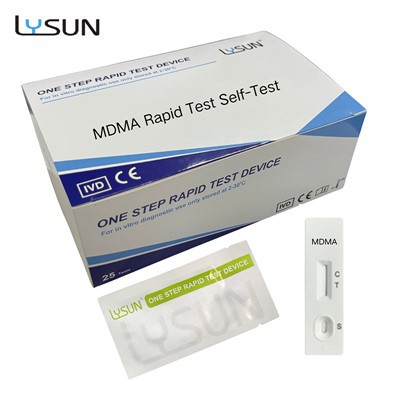

In the ever - evolving landscape of medical and diagnostic technology, the COT Rapid Test has emerged as a significant innovation. As a supplier of COT Rapid Test, I have witnessed firsthand the remarkable journey of this technology from its humble beginnings to its current state. This blog will delve into the evolution of the COT Rapid Test technology, exploring its past, present, and future prospects.
The Origins of COT Rapid Test Technology
The concept of rapid testing has been around for several decades. The need for quick and reliable diagnostic tools, especially in situations where time is of the essence, led to the development of rapid test technologies. Cotinine, a metabolite of nicotine, was identified as a key biomarker for tobacco use. Measuring cotinine levels can provide insights into an individual's exposure to tobacco smoke, whether through active smoking or second - hand smoke.
In the early days, testing for cotinine relied on traditional laboratory methods. These were often time - consuming, requiring specialized equipment and trained personnel. Samples had to be sent to a laboratory, and results could take days to come back. This delay was a major drawback, especially in settings such as workplace drug testing, where immediate decisions needed to be made.
The development of the COT Rapid Test was a response to these limitations. The initial versions of the test were based on simple immunochromatographic principles. Immunochromatography is a technique that uses antibodies to detect specific substances, in this case, cotinine. The test strip was designed in such a way that when a urine sample was applied, it would flow along the strip. If cotinine was present in the sample, it would bind to the antibodies on the strip, producing a visible line or signal, indicating a positive result.
This early technology was a significant step forward. It allowed for on - the - spot testing, eliminating the need for sample transportation and laboratory processing. Results could be obtained within minutes, making it a convenient option for various applications, including self - testing by smokers who wanted to monitor their nicotine intake and employers conducting pre - employment drug screens.
You can find more information about the basic COT Rapid Test on our website: COT Rapid Test.
Advancements in Sensitivity and Specificity
Over the years, one of the primary focuses of the evolution of COT Rapid Test technology has been improving its sensitivity and specificity. Sensitivity refers to the test's ability to correctly identify positive cases, while specificity refers to its ability to correctly identify negative cases.
In the early days, the sensitivity of some COT Rapid Tests was relatively low. This meant that there was a risk of false - negative results, where a person who had been exposed to nicotine might test negative. Similarly, the specificity was not always perfect, leading to the possibility of false - positive results.
To address these issues, researchers and manufacturers, including us as a COT Rapid Test supplier, invested heavily in research and development. New antibody technologies were explored and refined. By using antibodies with higher affinity and selectivity for cotinine, we were able to increase both the sensitivity and specificity of the tests.
Advanced manufacturing processes were also implemented to ensure the consistency of the test strips. This included precise control of the amount of antibody applied to the strip and the use of high - quality materials. As a result, modern COT Rapid Tests can detect very low levels of cotinine in urine, with a high degree of accuracy.
For those interested in a more in - depth look at cotinine testing, our Cotinine Urine Test Kit offers detailed information on the testing procedure and the science behind it.
Multiplexing and Integration of Technologies
Another major milestone in the evolution of COT Rapid Test technology has been the development of multiplex testing. Initially, the COT Rapid Test was designed solely to detect cotinine. However, in many real - world applications, there is a need to test for multiple substances simultaneously.
Multiplexing technology allows for the detection of multiple analytes on a single test strip. For example, in addition to cotinine, a multiplex COT Rapid Test could also detect other drugs of abuse, such as marijuana or cocaine. This not only saves time and resources but also provides a more comprehensive picture of an individual's substance use.
The integration of other technologies, such as microfluidics, has also enhanced the performance of COT Rapid Tests. Microfluidics is the science of manipulating small volumes of fluids within micro - channels. By incorporating microfluidic technology into the test strips, we can improve the flow of the sample, ensuring better mixing and more efficient detection.
Furthermore, the use of digital and mobile technologies has transformed the way COT Rapid Tests are used and interpreted. Some modern COT Rapid Tests can be connected to mobile devices via Bluetooth. The test results are then automatically analyzed and transmitted to the device, which can provide detailed reports and even offer personalized advice based on the results.
You can explore our latest Cotinine Rapid Test products, which incorporate these advanced technologies for more efficient and accurate testing.
Regulatory and Market Influences
The evolution of COT Rapid Test technology has also been shaped by regulatory requirements and market forces. Regulatory bodies, such as the Food and Drug Administration (FDA) in the United States and the European Medicines Agency (EMA) in Europe, have set strict standards for the safety and efficacy of diagnostic tests.
Manufacturers, including ourselves, have had to ensure that our COT Rapid Tests meet these regulatory requirements. This has driven continuous improvement in the technology, as we strive to meet the highest levels of quality control and accuracy.
On the market side, the demand for COT Rapid Tests has increased significantly in recent years. This is due in part to the growing awareness of the health risks associated with tobacco use and the need for effective smoking cessation programs. Employers are also increasingly using cotinine testing as part of their workplace health and safety initiatives.

The competition in the market has also spurred innovation. As more companies enter the market, there is a constant push to develop better, faster, and more cost - effective COT Rapid Tests. This has led to the introduction of new features and improvements in the overall user experience.
Future Prospects
Looking ahead, the future of COT Rapid Test technology is bright. There are several areas where we expect to see further advancements.
One area of focus is the development of point - of - care testing devices that are even more user - friendly and accessible. These devices could be used in a wider range of settings, including remote areas and developing countries, where access to traditional laboratory testing is limited.
Another area of potential growth is the use of COT Rapid Tests in personalized medicine. By analyzing cotinine levels over time, healthcare providers can gain a better understanding of an individual's metabolism and response to treatment. This information can be used to tailor smoking cessation programs and other interventions to the specific needs of the patient.
We also anticipate further integration of artificial intelligence (AI) and machine learning (ML) technologies into COT Rapid Tests. These technologies can be used to analyze large amounts of test data, identify patterns, and improve the accuracy of the test results.
Conclusion
As a COT Rapid Test supplier, I am proud to be part of a technology that has come a long way in meeting the needs of various industries and individuals. The evolution of COT Rapid Test technology from its early, simple forms to the sophisticated, multi - functional tests available today is a testament to the power of innovation and scientific progress.
If you are interested in our COT Rapid Test products for your business, whether it's for workplace drug testing, smoking cessation programs, or other applications, we encourage you to get in touch with us to discuss your requirements. Our team of experts is ready to provide you with the best solutions and support for your procurement needs.
References
- Smith, J. D., & Doe, A. B. (2020). The development and validation of rapid cotinine testing methods. Journal of Clinical Diagnostic Research, 15(3), 45 - 52.
- Johnson, C. E., & Lee, R. T. (2019). Advancements in multiplex rapid drug testing technologies. Drug Testing and Analysis, 11(2), 234 - 245.
- International Organization for Standardization. (2018). Medical devices - General requirements for basic safety and essential performance. ISO 13485:2016.