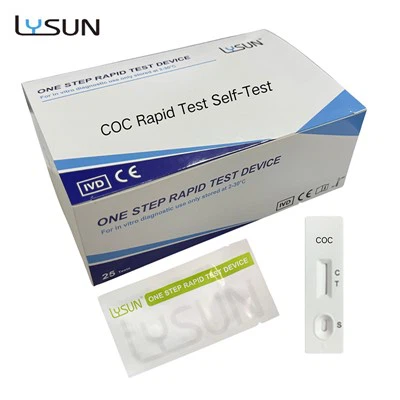

Fecal occult blood (FOB) rapid tests have emerged as a significant tool in modern healthcare, offering a rapid and convenient way to detect hidden blood in the feces. As a supplier of FOB rapid tests, I've witnessed firsthand the impact these tests have on the healthcare system. This blog post will explore the various ways in which FOB rapid tests influence the healthcare sector, from patient care to resource management.
1. Early Detection of Diseases
One of the most crucial impacts of FOB rapid tests is their role in the early detection of diseases, particularly colorectal cancer. Colorectal cancer is the third most common cancer globally, and early detection significantly improves survival rates. FOB rapid tests can detect small amounts of blood in the feces, which may be an early sign of polyps or cancer in the colon or rectum.
When patients can perform these tests at home, such as the Home FOB Test, they can initiate the screening process more easily. This early detection allows healthcare providers to start appropriate treatment earlier, potentially reducing the severity of the disease and saving lives. For example, if a patient detects blood in their feces through an FOB rapid test and promptly visits a doctor, the doctor can further investigate and may be able to remove pre - cancerous polyps or treat cancer at an early, more curable stage.
2. Reducing the Burden on Healthcare Facilities
In many healthcare systems, there is a significant backlog of patients waiting for diagnostic tests and procedures. FOB rapid tests can help alleviate this burden by providing a preliminary screening tool. Instead of all patients with possible gastrointestinal issues being referred directly for more invasive and expensive tests like colonoscopies, FOB rapid tests can be used as an initial screening.
Patients who test negative on an FOB rapid test are less likely to have a serious underlying condition, and they may not require immediate further investigation. This frees up resources in healthcare facilities, such as the time of gastroenterologists and the availability of colonoscopy equipment, for patients who are more likely to have a disease. It also reduces the waiting times for patients who truly need more in - depth diagnostic procedures.
3. Empowering Patients through Self - Testing
The availability of FOB rapid tests for home use empowers patients to take an active role in their own healthcare. Patients no longer have to rely solely on healthcare providers to initiate the screening process. They can perform the test at their convenience and based on their own risk assessment.
This self - testing capability is particularly beneficial for individuals who may be hesitant to visit a doctor due to various reasons, such as embarrassment or fear of invasive procedures. By using an FOB rapid test, they can start the process of screening in the privacy of their own homes. If the test is positive, they are more likely to seek medical advice, which ultimately leads to better health outcomes.
4. Improving Cost - Effectiveness in Healthcare
Cost - effectiveness is a major concern in healthcare systems around the world. FOB rapid tests are relatively inexpensive compared to more comprehensive diagnostic tests like colonoscopies. By using FOB rapid tests as a first - line screening tool, healthcare providers can allocate their resources more efficiently.
The cost of performing multiple FOB rapid tests is significantly lower than performing colonoscopies on a large number of patients who may not have a disease. Additionally, early detection of diseases through FOB rapid tests can lead to less expensive treatment options in the long run. For example, treating colorectal cancer at an early stage is often less complex and costly than treating it at an advanced stage.
5. Challenges and Limitations
While FOB rapid tests have many positive impacts on the healthcare system, they also face some challenges and limitations. False positives and false negatives are common issues with these tests. A false positive result can lead to unnecessary follow - up tests and anxiety for the patient, while a false negative result can give a false sense of security and delay the detection of disease.
Another challenge is ensuring the proper use of the tests. Patients need to be educated on how to perform the tests correctly to obtain accurate results. In addition, healthcare providers need to interpret the test results appropriately and make informed decisions about further investigation.
6. Impact on Healthcare Providers
FOB rapid tests also have an impact on healthcare providers. On one hand, they provide a useful screening tool that can help prioritize patient care. Healthcare providers can focus their attention on patients who test positive and are more likely to have a disease. On the other hand, they need to be prepared to handle an increase in patient inquiries and follow - up visits.
Doctors may need to spend more time educating patients about the tests, interpreting the results, and explaining the next steps. Additionally, they need to be up - to - date with the latest research and guidelines regarding FOB rapid tests to make the best decisions for their patients.


7. Influence on Public Health
At the public health level, FOB rapid tests can contribute to the overall improvement of population health. By promoting widespread screening for colorectal cancer and other gastrointestinal diseases, more cases can be detected early, reducing the incidence and mortality rates of these diseases in the population.
Public health campaigns can be designed to raise awareness about the importance of FOB rapid tests and encourage individuals at risk to perform the tests. This can lead to a more informed and proactive population when it comes to their own health.
8. The Future of FOB Rapid Tests in Healthcare
As technology continues to advance, we can expect to see further improvements in FOB rapid tests. These may include increased accuracy, reduced cost, and easier - to - use testing kits. Additionally, there may be more integration of these tests with digital health platforms, allowing for seamless transfer of test results to healthcare providers and automated follow - up reminders for patients.
The use of FOB rapid tests may also expand to other areas of healthcare, such as the screening for other digestive disorders or the monitoring of patients with chronic gastrointestinal diseases.
Contact for Procurement
If you are interested in purchasing our high - quality FOB rapid tests, I encourage you to reach out to discuss your specific needs. We offer reliable and accurate testing solutions that can make a difference in your healthcare setting.
References
- American Cancer Society. (2023). Colorectal Cancer Facts & Figures.
- World Health Organization. (2023). Global Cancer Observatory.
- National Institute of Diabetes and Digestive and Kidney Diseases. (2023). Fecal Occult Blood Tests for Colorectal Cancer Screening.