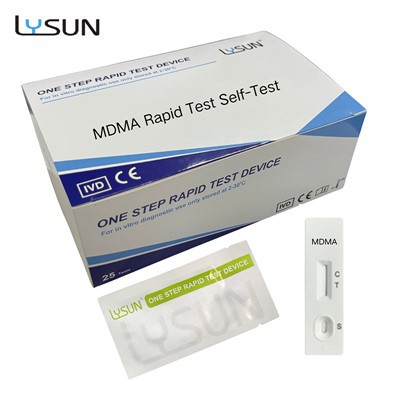

As a supplier of FOB rapid tests, ensuring the accuracy of these vital diagnostic tools is not just a goal; it's an unwavering commitment. Fecal occult blood (FOB) rapid tests play a crucial role in early detection of various gastrointestinal conditions, including colorectal cancer. In this blog, I'll delve into the meticulous processes and strategies that FOB rapid test manufacturers, like us, employ to guarantee the accuracy of our products.
Stringent Raw Material Selection
The foundation of an accurate FOB rapid test lies in the quality of its raw materials. We source high - grade chemicals and reagents from trusted suppliers. For instance, the antibodies used in our tests are carefully selected based on their specificity and affinity for the target analytes. These antibodies are the key to detecting even trace amounts of occult blood in fecal samples.
We conduct thorough quality control checks on all incoming raw materials. Each batch is tested for purity, stability, and performance. Only materials that meet our strict quality standards are used in the manufacturing process. This rigorous selection process minimizes the risk of false results caused by sub - standard raw materials.
Advanced Manufacturing Processes
Our manufacturing facilities are equipped with state - of - the - art technology to ensure precision and consistency. The production of FOB rapid tests involves a series of complex steps, from reagent preparation to test strip assembly.
Automated manufacturing systems are used to precisely dispense reagents onto test strips. This eliminates human error and ensures that each test strip receives the exact amount of reagents required for accurate detection. The test strips are then carefully dried and packaged in a controlled environment to maintain their stability.
During the manufacturing process, we implement in - process quality control checks at multiple stages. These checks include visual inspections, functional tests, and performance evaluations. Any test strips that do not meet our quality criteria are immediately discarded, ensuring that only the highest - quality products reach the market.
Comprehensive Validation and Verification
Before a new FOB rapid test product is launched, it undergoes extensive validation and verification studies. These studies are conducted in accordance with international standards and guidelines, such as those set by the World Health Organization (WHO) and the United States Food and Drug Administration (FDA).


Validation studies involve testing the accuracy, sensitivity, and specificity of the test using a large number of clinical samples. Sensitivity refers to the ability of the test to correctly identify positive samples, while specificity refers to its ability to correctly identify negative samples. Our goal is to achieve high sensitivity and specificity rates to minimize false positives and false negatives.
Verification studies, on the other hand, are conducted to ensure that the test performs consistently under different conditions, such as variations in temperature, humidity, and sample types. We also compare our test results with those obtained using gold - standard reference methods to confirm its accuracy.
Continuous Quality Monitoring
Once our FOB rapid tests are on the market, we continue to monitor their quality through post - market surveillance. We collect feedback from customers, including healthcare professionals and end - users, to identify any potential issues with the test's performance.
We also conduct regular internal audits and quality reviews to ensure that our manufacturing processes and quality control systems are up - to - date and effective. Any deviations from our quality standards are investigated promptly, and corrective actions are taken to prevent recurrence.
Staff Training and Competence
The expertise and knowledge of our staff are crucial in ensuring the accuracy of our FOB rapid tests. We provide comprehensive training programs for all employees involved in the manufacturing, quality control, and research and development of our products.
Our training programs cover a wide range of topics, including the principles of FOB testing, quality management systems, and the use of advanced manufacturing equipment. We also encourage our staff to participate in continuing education and professional development activities to stay updated on the latest advancements in the field.
Collaboration with Research Institutions
We actively collaborate with leading research institutions and academic centers to conduct research and development activities. These collaborations allow us to access the latest scientific knowledge and technologies, which can be applied to improve the accuracy and performance of our FOB rapid tests.
For example, we may collaborate with researchers to develop new antibodies or detection methods that can enhance the sensitivity and specificity of our tests. These research partnerships also provide us with an opportunity to validate our products in real - world clinical settings.
Conclusion
As a FOB rapid test supplier, we understand the critical importance of accuracy in our products. By implementing stringent raw material selection, advanced manufacturing processes, comprehensive validation and verification, continuous quality monitoring, staff training, and collaboration with research institutions, we are able to ensure that our FOB rapid tests provide reliable and accurate results.
If you are interested in Home FOB Test or would like to discuss a potential procurement of our FOB rapid tests, we welcome you to reach out to us. Our team of experts is ready to answer your questions and provide you with the best solutions for your diagnostic needs.
References
- World Health Organization. Guidelines for Diagnostic Tests and Assays.
- United States Food and Drug Administration. Guidance for Industry: In Vitro Diagnostic Multivariate Index Assays.
- Clinical and Laboratory Standards Institute (CLSI). Performance Standards for Fecal Occult Blood Testing.