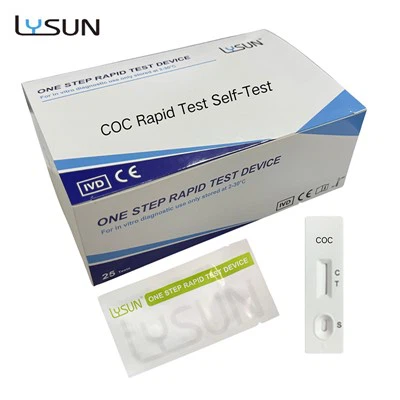

In the realm of drug testing, COT Rapid Tests, also known as Cotinine Rapid Tests, have gained significant popularity due to their convenience and speed in detecting cotinine, a metabolite of nicotine. As a supplier in this field, I often encounter questions from customers regarding the diversity of brands available in the market. This article aims to explore the different brands of COT Rapid Tests, detailing their features, advantages, and what sets them apart.
The Importance of COT Rapid Tests
Cotinine is a more accurate biomarker for nicotine exposure compared to nicotine itself because it has a longer half - life in the body. COT Rapid Tests, such as the ones available at COT Rapid Test, provide a quick and cost - effective way to determine if an individual has been exposed to nicotine. These tests are widely used in various settings, including workplaces, healthcare facilities, and research institutions. Workplaces may use them to enforce no - smoking policies, while healthcare providers can use the results to guide smoking cessation programs.
Factors Influencing the Diversity of Brands
- Market Demand: The increasing awareness of the health risks associated with smoking and the growing need for rapid nicotine detection have led to a surge in the demand for COT Rapid Tests. This has encouraged multiple manufacturers to enter the market, each offering their own unique brand.
- Technological Advancements: Different brands may incorporate various technologies in their test kits. Some use advanced immunoassay techniques that offer higher sensitivity and specificity, while others focus on user - friendly designs. For example, some brands may have simpler procedures for sample collection, such as using a urine collection cup included in the Cotinine Urine Test Kit.
- Target Markets: Brands may also be tailored to specific target markets. Some manufacturers may target large corporations that require bulk testing, offering cost - effective solutions in larger quantities. Others may focus on the consumer market, developing tests that are easy to use at home.
Commonly Available Brands
While it's not possible to list every single brand in the market, here are some general characteristics of the different types of COT Rapid Test brands:
- High - End Brands: These brands often invest heavily in research and development to ensure the highest quality and accuracy of their tests. They typically use state - of - the - art technology, offering a high level of sensitivity and specificity. High - end brands may also provide comprehensive customer support, including detailed instructions, online resources, and customer service representatives. However, the cost of these tests is usually higher compared to other brands.
- Economy Brands: Geared towards cost - conscious consumers and organizations, economy brands offer COT Rapid Tests at a lower price point. While they may not have all the bells and whistles of high - end brands, they still provide reliable results. These brands often focus on streamlining production processes to reduce costs without sacrificing too much on quality.
- Specialty Brands: Some brands may specialize in certain types of COT Rapid Tests. For instance, there are brands that focus on developing tests for specific populations, such as pregnant women or individuals with certain medical conditions. These specialty tests may have different cutoff levels or be designed to be more sensitive to the unique needs of these populations.
How to Choose the Right Brand
As a supplier, I understand that choosing the right brand of COT Rapid Test can be a daunting task. Here are some factors to consider:


- Accuracy and Reliability: Look for brands that have been validated through independent studies. The accuracy of a COT Rapid Test is crucial, especially in settings where the results may have significant consequences, such as in employment or healthcare decisions. Brands that provide information on their sensitivity, specificity, and false - positive/negative rates are generally more reliable.
- Ease of Use: Consider the end - users of the test. If the tests are to be used by non - medical personnel, such as in a workplace or at home, choose a brand with a simple and intuitive design. Tests that come with clear instructions and easy - to - read results are more likely to be used correctly.
- Cost: Balance the cost of the test with its quality and features. While high - end brands may offer the best accuracy, they may not always be necessary for all applications. Economy brands can be a great option for large - scale testing where cost is a major concern.
- Customer Support: A brand that offers good customer support can make a big difference, especially if you encounter any issues during testing or interpretation of results. Look for brands that have responsive customer service teams and provide additional resources, such as user manuals and online tutorials.
Our Role as a Supplier
As a COT Rapid Test supplier, we have a wide range of brands and products in our inventory to meet the diverse needs of our customers. We understand that each customer has unique requirements, and we are dedicated to helping them choose the most suitable brand and product. Whether you are a large corporation looking for an economical solution for mass testing or a healthcare provider in need of a high - accuracy test, we can provide you with the right options.
We also provide comprehensive support services, including product training, technical assistance, and after - sales support. Our team of experts is always available to answer any questions you may have about COT Rapid Tests, their usage, and interpretation of results.
Contact Us for Purchasing
If you are interested in purchasing COT Rapid Tests, whether for your workplace, healthcare facility, or personal use, we encourage you to contact us for more information and to discuss your specific requirements. We are committed to providing you with the best products and services in the market. Visit Cotinine Rapid Test to learn more about our product offerings.
References
- Erasmus, M.J., Smith, J.C., & Conroy, R.M. (2007). Detection of tobacco use with tests for total cotinine in saliva and urine. Clinical Chemistry, 53(1), 109 - 116.
- Benowitz, N.L. (1996). Cotinine as a biomarker for environmental tobacco smoke exposure. American Journal of Public Health, 86(9), 1268 - 1270.
- Jarvis, M.J., Russell, M.A., Feyerabend, C., & Mant, D. (1982). A critical evaluation of plasma cotinine as an index of nicotine intake. British Journal of Addiction, 77(1), 63 - 74.