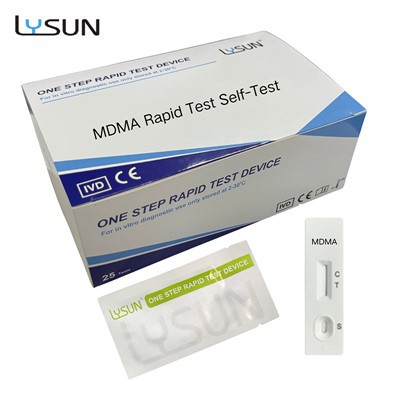

As a supplier of THC tests, the question of whether a THC test can be calibrated is one that often comes up in discussions with customers, industry peers, and regulatory bodies. In this blog post, I'll delve into the science behind THC testing, the concept of calibration, and its implications for the accuracy and reliability of these tests.
Understanding THC Testing
Before we discuss calibration, it's essential to understand what THC testing is and why it's important. THC, or tetrahydrocannabinol, is the primary psychoactive compound found in cannabis. Its detection is crucial in various settings, including workplace drug testing, criminal justice, and healthcare. There are different types of THC tests available, such as urine, blood, saliva, and hair tests, each with its own advantages and limitations.
Urine tests are the most common type of THC test due to their non - invasiveness and relatively long detection window. Blood tests, on the other hand, provide a more accurate picture of recent THC consumption but are more invasive. Saliva tests are quick and easy to administer, making them suitable for on - the - spot testing, while hair tests can detect THC use over a more extended period.
For those interested in our THC testing solutions, we offer THC Rapid Test and THC Test Kit, which are designed to provide reliable and accurate results.
What is Calibration?
Calibration is the process of adjusting a measuring instrument or test to ensure that it provides accurate and consistent results. In the context of THC testing, calibration involves comparing the test's results to a known standard. This standard is typically a sample with a precisely measured amount of THC. By calibrating the test, we can minimize errors and variations in the results, ensuring that the test is reliable and trustworthy.
There are several reasons why calibration is necessary. Firstly, manufacturing processes can introduce small variations in the sensitivity and specificity of THC tests. Calibration helps to correct these variations, ensuring that all tests from the same batch produce consistent results. Secondly, environmental factors such as temperature, humidity, and storage conditions can affect the performance of THC tests. Regular calibration can account for these factors and maintain the accuracy of the tests over time.
The Science of Calibrating THC Tests
Calibrating a THC test involves a series of steps. The first step is to select an appropriate reference standard. This standard should be a well - characterized sample with a known concentration of THC. The reference standard is typically prepared in a laboratory using high - purity THC and a suitable matrix, such as urine or saliva, depending on the type of test.
Once the reference standard is prepared, it is used to test the THC test device. The test device is exposed to the reference standard, and the results are recorded. The recorded results are then compared to the known concentration of THC in the reference standard. If there is a discrepancy between the two, the test device is adjusted to correct the error.
This adjustment can be done in several ways. For immunoassay - based THC tests, which are the most common type of THC tests, the adjustment may involve changing the concentration of the antibodies or the reagents used in the test. For more advanced tests, such as chromatography - based tests, the adjustment may involve fine - tuning the instrument's parameters, such as the flow rate or the temperature.
Challenges in Calibrating THC Tests
While calibration is an essential process for ensuring the accuracy of THC tests, it is not without its challenges. One of the main challenges is the lack of a universal reference standard. Different laboratories and manufacturers may use different reference standards, which can lead to variations in the calibration process and the results.
Another challenge is the complexity of the THC molecule. THC exists in different forms, such as delta - 9 - THC, delta - 8 - THC, and various metabolites. These different forms can have different affinities for the antibodies used in immunoassay - based tests, which can make it difficult to develop a single reference standard that accurately represents all forms of THC.
In addition, the legal status of cannabis varies from country to country and from state to state. This can make it challenging to obtain high - purity THC for use in reference standards, as the production and distribution of THC are often regulated.
Importance of Calibration for THC Test Suppliers
As a THC test supplier, calibration is of utmost importance. Calibration ensures that our products meet the highest standards of quality and accuracy. By providing calibrated THC tests, we can build trust with our customers, who rely on our tests for important decisions, such as employee screening or legal proceedings.
Calibration also helps us to comply with regulatory requirements. Many countries and states have strict regulations regarding the accuracy and reliability of drug tests. By calibrating our tests regularly, we can demonstrate that our products meet these regulatory standards.
Moreover, calibration can help us to improve our products over time. By analyzing the calibration data, we can identify areas for improvement in our manufacturing processes and test designs. This can lead to the development of more accurate and reliable THC tests in the future.
Conclusion
In conclusion, a THC test can be calibrated, and calibration is a crucial process for ensuring the accuracy and reliability of these tests. While there are challenges in calibrating THC tests, such as the lack of a universal reference standard and the complexity of the THC molecule, these challenges can be overcome through careful planning and scientific research.
As a THC test supplier, we are committed to providing high - quality, calibrated THC tests. Our THC Rapid Test and THC Test Kit are designed to meet the highest standards of accuracy and reliability. If you are interested in purchasing our THC tests or have any questions about calibration or our products, please feel free to contact us for more information and to discuss your procurement needs.


References
- Smith, J. (2020). Principles of Drug Testing. Elsevier.
- Jones, A. (2019). Cannabis and Drug Testing. CRC Press.
- National Institute on Drug Abuse. (2021). Marijuana DrugFacts. Retrieved from [Website URL of NIDA]
- World Health Organization. (2020). Guidelines for Drug Testing in Workplace. Geneva: WHO.