
Malaria Remains a Major Public Health Challenge in Africa
Malaria continues to place a significant burden on healthcare systems across Africa. According to the World Health Organization (WHO), the African Region accounted for approximately 95% of global malaria cases and deaths in 2024. Children under five years of age remain among the most vulnerable groups.
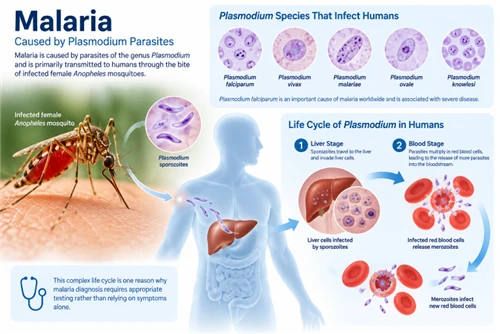
Malaria is caused by Plasmodium parasites and is transmitted to humans through the bites of infected female Anopheles mosquitoes. Although malaria is preventable and treatable, delayed diagnosis and treatment can lead to severe illness and, in some cases, death.
The risk of malaria is not the same everywhere. Transmission patterns vary by country and region and may change with rainfall, temperature, local mosquito populations and other environmental factors. For healthcare providers, access to appropriate diagnostic testing is therefore an important part of malaria prevention and control.
Fever May Be an Early Sign of Malaria
Early malaria symptoms can be similar to those of other common illnesses. People may experience:
Fever
Chills or shivering
Headache
Fatigue and general discomfort
These symptoms alone cannot confirm malaria. Other infections may also cause fever, and relying only on symptoms can make it difficult to identify the underlying cause.
Some patients, particularly young children and other high-risk groups, may develop severe complications. Difficulty breathing, impaired consciousness, convulsions or other signs of severe illness require urgent medical attention.
When malaria is suspected, timely medical assessment is important. WHO recommends confirming suspected malaria cases with parasite-based diagnostic testing, using microscopy or a rapid diagnostic test where appropriate.
Why Timely Malaria Testing Matters
Diagnostic testing helps healthcare professionals make more informed decisions about patient care. It can help distinguish malaria from other possible causes of fever and support appropriate treatment decisions.
In many healthcare settings, rapid diagnostic tests (RDTs) offer a practical option for detecting malaria parasite antigens. Depending on the test design, different products may detect specific malaria species or broader groups of malaria parasites.
The selection of a test should take into account local malaria epidemiology, the diagnostic needs of the healthcare facility, product instructions and applicable national guidelines. Testing should also be supported by appropriate quality-control procedures and professional interpretation.
A negative test result does not mean that every possible cause of fever has been ruled out. If symptoms persist or the patient's condition worsens, further clinical assessment may be necessary.
Choosing the Appropriate Malaria Rapid Diagnostic Test
Malaria rapid diagnostic tests are designed for different detection targets. Understanding these differences helps healthcare providers and distributors select products that suit their intended use.
Malaria P.f. tests are designed to detect targets associated with Plasmodium falciparum, a species responsible for a substantial proportion of severe malaria cases.
Malaria P.f./Pan tests combine detection of P. falciparum with a pan-malaria target, according to the specific product design.
Malaria P.f./P.v. tests are designed to differentiate targets associated with P. falciparum and Plasmodium vivax, where supported by the product's labeling and instructions.
These test formats are not interchangeable in every setting. Local species distribution, national testing policies and the specific product instructions should guide test selection.
For healthcare providers, laboratories, clinics and medical distributors, access to suitable diagnostic products is one part of building a reliable malaria testing service.
LUSUN Malaria Rapid Diagnostic Testing Solutions
LUSUN provides malaria rapid diagnostic testing products for professional diagnostic applications. Its malaria product range includes different test formats designed for specific detection targets.
Depending on local requirements and the intended application, healthcare providers and distributors can refer to the relevant product information for options such as:
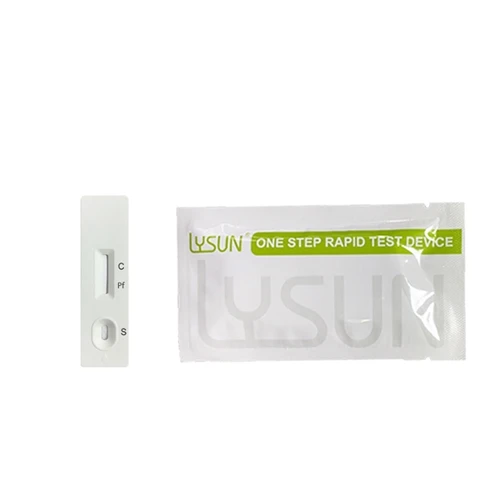
Malaria P.f. Rapid Test Device
Malaria P.f./Pan Rapid Test Device
Malaria P.f./P.v. Rapid Test Device
Each product should be selected and used according to its intended purpose, approved labeling and instructions for use. Healthcare professionals should interpret test results alongside clinical findings and relevant local diagnostic guidelines.
For medical distributors and healthcare organizations serving malaria-endemic markets, understanding the available test formats can help support appropriate product selection and diagnostic supply planning.
Supporting Better Malaria Diagnosis Through Awareness and Access
Malaria control depends on several coordinated efforts, including mosquito-bite prevention, community awareness, timely access to healthcare, reliable diagnosis and appropriate treatment.
Improving access to suitable diagnostic tools can support healthcare professionals in identifying suspected cases and making informed clinical decisions. At the same time, patients with fever should seek medical assessment rather than relying on symptoms alone or delaying care.
By providing diagnostic testing solutions for professional use, LUSUN aims to support healthcare providers and partners in meeting a range of testing needs.
Timely testing matters. Appropriate diagnosis is an important step toward better malaria care.